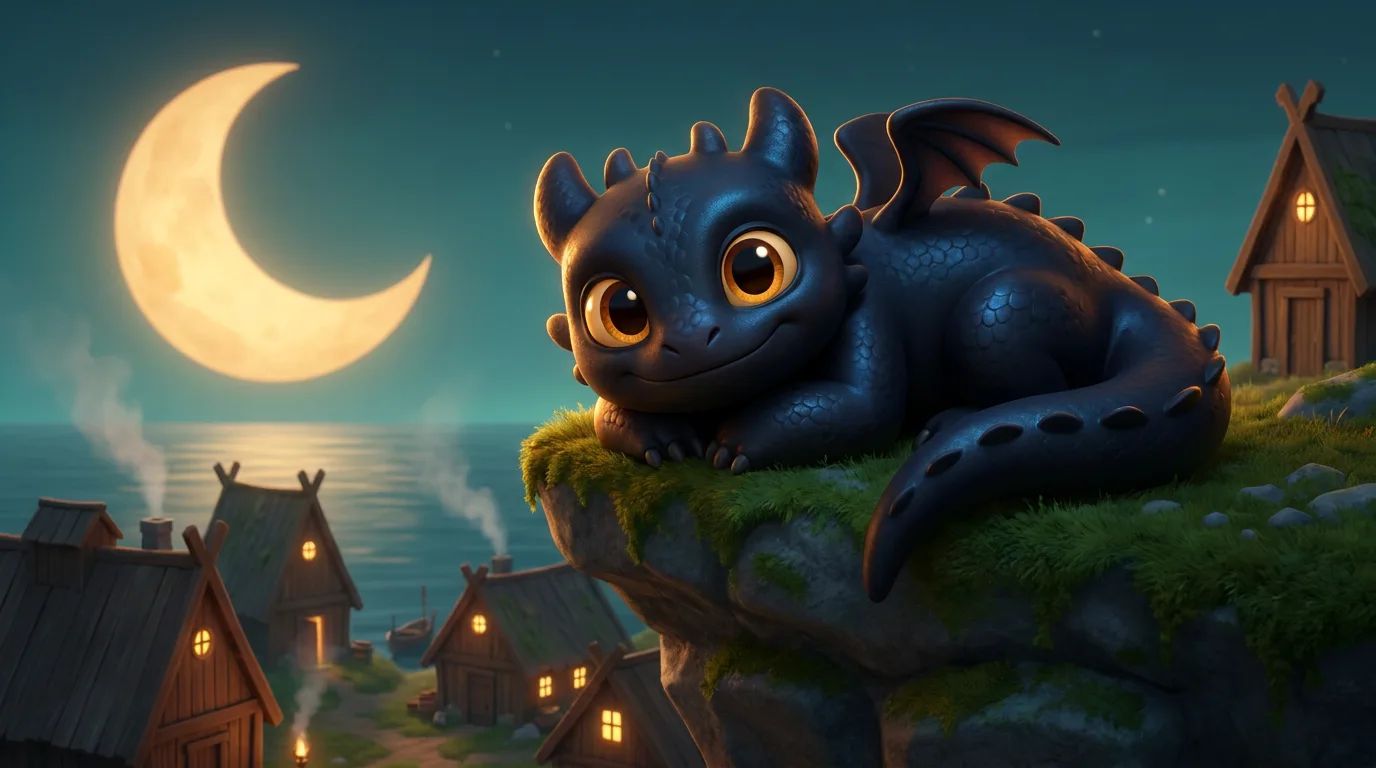
A plump friendly dragon with an ember-lit belly curled on a mossy cliff above a moonlit fishing village at dusk

Dragon Name Generator

Hatch a name worth hoarding: cozy hatchlings, loyal companions, and ancient wyrms of the old tongue.

Dragon Name Generator

Generate dragon names in six styles, from fearsome ancient wyrms to loyal companions and punny sidekicks, with optional elemental flavour.

How to name a dragon (and make it stick)

A good dragon name does half the storytelling before the wings even spread. Say it out loud and you already know whether this creature levels castles or naps in the vegetable patch. This page explains what makes a name feel draconic, how naming a loyal companion differs from naming an ancient wyrm, and how to pick names that hold up in fiction, at the gaming table, and in video games.

What makes a name sound like a dragon

Draconic names lean on phonetics more than meaning. Hard stops and back-of- the-throat consonants (K, G, R, V, X, Z) read as scales, smoke, and old anger: that is why Vorgarath and Kragoth feel dangerous before you know a single fact about them. Sibilants (S, Z, TH) add the hiss of something large breathing in a dark cave. Low, open vowels (O, U, A) suggest size, while bright vowels (EE, I) shrink a creature down to hatchling scale, which is exactly why Piplet could never guard a mountain of gold.

Length signals age. Real-world naming follows the same instinct: short names feel young and familiar, long names feel formal and old. A three-syllable name with an epithet, something like Aurelianos, the Glacier Born, implies centuries of history. One bouncy syllable implies a creature that still trips over its own tail.

Companion dragons are named like pets, ancient wyrms like weather

A loyal companion dragon is family, so it gets named the way people actually name animals they love: after food, sounds, and textures. Waffles, Pebble, and Toastybelly work because they are warm, concrete, and a little bit silly, the same reason half the world's dogs are named after snacks. The gentle joke is the point; it tells the reader this dragon is on your side. Cozy adventure stories about Vikings and their dragons run on exactly this contrast: a huge, dangerous-looking creature with a name you would give a house cat.

An ancient wyrm goes the other way. Nobody named it; the name accreted, like a mountain getting a name from the villages beneath it. Reach for something long and heavy, then bolt on an epithet that reads like a warning: the Everburning, the Winterjaw, the Old Terror of the Passes. An epithet is cheap worldbuilding, since it smuggles in a whole rumor ("why is it called that?") in four words.

Tips for fiction, D&D, and games

For fiction, say the name aloud and make sure it cannot be confused with any other character on the page; readers skim shapes, so avoid two names sharing a first letter and length. For D&D, pick a name your table can actually pronounce mid-combat, and let the epithet carry the menace. A dungeon master can also reuse this generator for a dragon's true name versus the name the local farmers use, which are rarely the same. For video games and streams, shorter is better: it has to fit a nameplate and be typeable in chat.

Element choice is a shortcut to coherence. If your dragon's breath, lair, and temperament all say ice, a name built from frost roots keeps the whole character pointing the same direction. And when in doubt, generate a batch of fifteen, read them out loud, and keep the one that makes you grin or shiver. That reaction is the entire test.

Worked examples

Guides

Frequently asked questions

How are the dragon names built?
Each name is assembled from a curated bank of more than 150 original roots, syllables, epithets, and flavour lines, using assembly rules tuned per style. Epic names stack hard consonants and sibilants into multi-syllable draconic words, mythic names run longer and vowel-forward with an 'old tongue' meaning, and companion or punny names borrow warm food, sound, and texture words. Everything runs locally in your browser the instant you press the button.
What style should I pick for a D&D dragon?
Match the style to the dragon's role at the table. A chromatic villain or ancient wyrm suits the epic or ancient-mythic styles, which produce names like Vorgarath or Aurelios with an epithet the party will remember. A metallic ally, a familiar, or a ranger's mount fits the loyal-companion style, and a comic-relief NPC dragon is exactly what the punny style is for. The elemental style is handy when the dragon's breath type is its defining trait.
Should my dragon's name be cute or fearsome?
Decide how the audience should feel the moment the name is spoken. Fearsome names use hard stops and low vowels (K, G, R, X, O, U) and grow longer with age and power. Cute names do the opposite: short, bouncy sounds, soft consonants, and everyday words like Pebble or Piplet. A useful trick for a companion dragon is a warm name with one draconic touch, such as Toastybelly or Cinderfang, so it still reads as a dragon.
Can I use these names commercially?
Yes. The generated names are yours to use in personal and commercial projects alike: novels, self-published books, tabletop campaigns, video games, and streams. The corpus is built from original and generic-fantasy vocabulary, and the generator deliberately excludes names from published franchises. As with any name, if you are building a major commercial brand around one, run your own trademark search first.
Does the element choice change the names?
Yes. Choosing fire, ice, storm, earth, or shadow steers the whole batch: elemental names are built directly from that element's roots (Cinder, Frost, Gale, Flint, Umbra and friends), while epic and mythic names draw their epithets and meanings from the matching pool, like 'the Everburning' or 'breath of the long winter'. Leave it on 'Any element' and each name rolls its own flavour.
Why do I get different names every time I press the button?
Every press rolls a fresh random seed and rebuilds the batch from scratch, so you can keep generating until something clicks. The logic itself is deterministic: the same seed always produces the same names, which is also how the site's automated tests verify every example shown on this page.
Are the names guaranteed to be unique?
Within a single batch, yes: duplicates are filtered out before you see them. Across the whole internet, no generator can promise that a short invented word has never been used before. If uniqueness matters for your project, generate a longer name, add an epithet, or combine a name with a title of your own.
Is this generator free, and does it work offline?
It is completely free, with no account, sign-up, or daily limit. The generator ships with the page and runs entirely on your device, so nothing you do is sent to a server, and it keeps working even if your connection drops after the page loads.